
Galway International Arts Festival has elevated its sustainability commitments to a new level by establishing, for the first time, an in-depth calculation of the greenhouse gas (GHG) emissions arising from its operations.
The report was conducted by Climeaction, a specialised climate action and environmental consultancy. The audit has identified emission ‘hotspots’ across the organisation’s operations, providing a vital framework for tracking annual emissions against GIAF’s ambitious carbon reduction targets.
This represents the first step in a multi-annual process spanning 2024 to 2026. Rather than a static measurement, each yearly audit is designed to build upon the last, with GIAF committed to continuously refining its calculation methodologies and working more intensively toward its sustainability goals. This iterative approach enables the festival to implement increasingly targeted actions and maintain a rigorous monitoring system to measure real-world progress.
Building on the Pacesetters Research
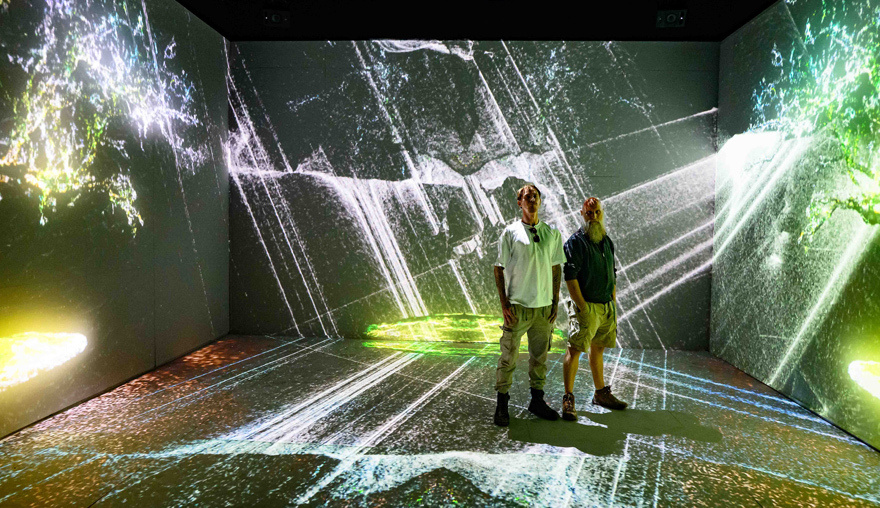
This work builds upon foundations laid in 2025 as part of the GIAF’s participation in the Pacesetters research programme. Pacesetters aims to empower Europe's cultural and creative industries to transition from passive observers of the climate crisis to active drivers of a sustainable, resilient societal transformation through innovative artistic entrepreneurship and cross-disciplinary collaboration. GIAF’s Funeral for Ashes exhibit acted as a research lab for the project in 2025, with the festival using it as a pilot to establish the carbon footprint of a single exhibit.
There are 14 other collaborators on the Pacesetters project spread across Europe, one of whom is GIAF Education Partner, University of Galway. The university itself is leading the way in sustainability, holding the position as the number one university in Ireland for sustainability for the fourth consecutive year (recognised by the Times Higher Education Impact Rankings). University of Galway, which accommodates approximately 20% of the GIAF programme annually, also holds a STARS Gold Rating and was the first university in Ireland to be named an SDG Ambassador.
Innovative Data Partnerships for 2026
As part of the 2026 Pacesetters project, GIAF is also engaging Norwegian climate-tech start-up Eventwood to measure the festival's real-world impact. Using the Eventpulse platform, the study will analyse visitor movement, concentration, and stay duration. These behavioural insights will help GIAF estimate visitor-related emissions and evaluate the festival’s societal reach across diverse communities.
Furthermore, GIAF is working with Climeaction to apply for ISO 20121 accreditation, the international standard for Sustainable Event Management, which integrates environmental, social, and economic impacts into a single verified framework.
First Thought Talks: Sustainability in Practice
Reflecting these themes, the First Thought Talks series will host a discussion titled Can Ordinary People Afford to Retrofit? at the Bailey Allen Hall, University of Galway, on 19 July. Sadhbh O’Neill (Lecturer in Climate Change Policy and Politics at DCU) will be joined by Jamie Goggins (Professor of Civil Engineering at the University of Galway) to propose essential changes to Ireland's sustainability transition.pr
Ongoing 2026 Sustainability Initiatives
To ensure a sustainable future, GIAF’s 2026 operations will continue to include:
· Transport: Active promotion of public transport and active travel.
· Energy: Continuous sourcing of energy from renewable sources.
· Engagement: Further development of the ‘Green Ambassadors’ programme.
· Waste Management: A strict focus on recycling and a single-use plastic ban at the Festival Garden and Heineken® Big Top.
· Circular Economy: Continuation of the reusable cup scheme and the reuse of materials in venue builds and sets.
· Efficiency: Targeted reductions in waste production and printing outputs.
· Supply Chain: Collaborating with partners for sustainable procurement.
These initiatives are made possible by the support of GIAF’s partners: The Arts Council, Fáilte Ireland, Galway City Council, University of Galway and Heineken®.
Note on Carbon Footprint Data
As this represents GIAF’s first in-depth greenhouse gas inventory, the festival is currently in a period of data digestion. Given the evolving nature of the festival, GIAF is committed to an annual audit cycle from 2024 to 2026. Each year will see a more refined data collection process, allowing the festival to improve its reporting accuracy and escalate its carbon reduction efforts annually. This ensures that long-term reporting reflects true, evidence-based environmental progress in a complex event environment.
More about the GHG Protocol and ISO 14064 Standards
GIAF’s carbon footprint has been prepared in accordance with the framework for conducting a GHG inventory for ISO 14064-1 and the World Resource Institute’s Greenhouse Gas Protocol. Together, these standards promote consistency and transparency in climate action strategies.
